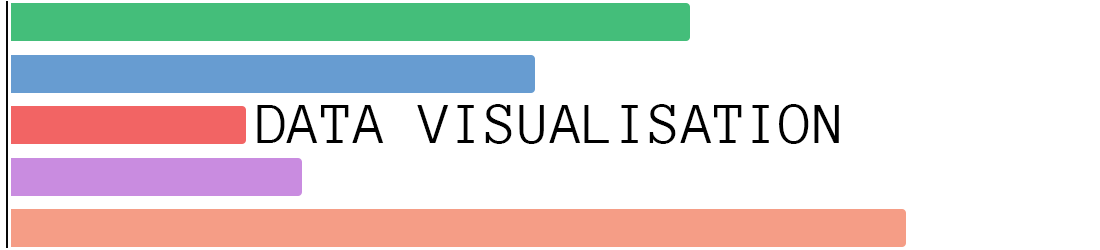
What is Data Vis?
- Data: Values of qualitative or quantitative variables belonging to a set of items.
- Data are typically the results of measurements and can be visualised using graphs or images.
- Data alone carries no meaning. Data must be interpreted and take on a meaning before it becomes information.
- Data Visualisation: The visualisation of data. Viewed by many disciplines as a modern equivalent of visual communication. Involves the creation and study of the visual representation of data.
[Data visualisation is] information that has been abstracted in some schematic form, including attributes or variables for the units of information.
Michael Friendly (2008). “Milestones in the history of thematic cartography, statistical graphics, and data visualization.” As cited in DataVis POD01 – What is Data Vis?
- A primary goal of data visualisation is to communicate information clearly and efficiently using statistical graphics, plots, and information graphics.
What is the difference between information graphics and data visualisation?
- Not all information visualisations are based on data, but all data visualisations are information visualisations.
- To be a data visualisation, there should be quantitative values on the axis.
- Effective visualisation helps users analyse and reason about data and evidence. It makes complex data more accessible, understandable and usable.
- Bar graphs are arguably the best form of data visualisation if you have two variables to communicate.
- If you’re looking at data over time, a line graph is the best choice for visualising the data.
- Bar charts, line graphs and timelines are easy to recognise, read and understand as the audience is familiar with them.

